

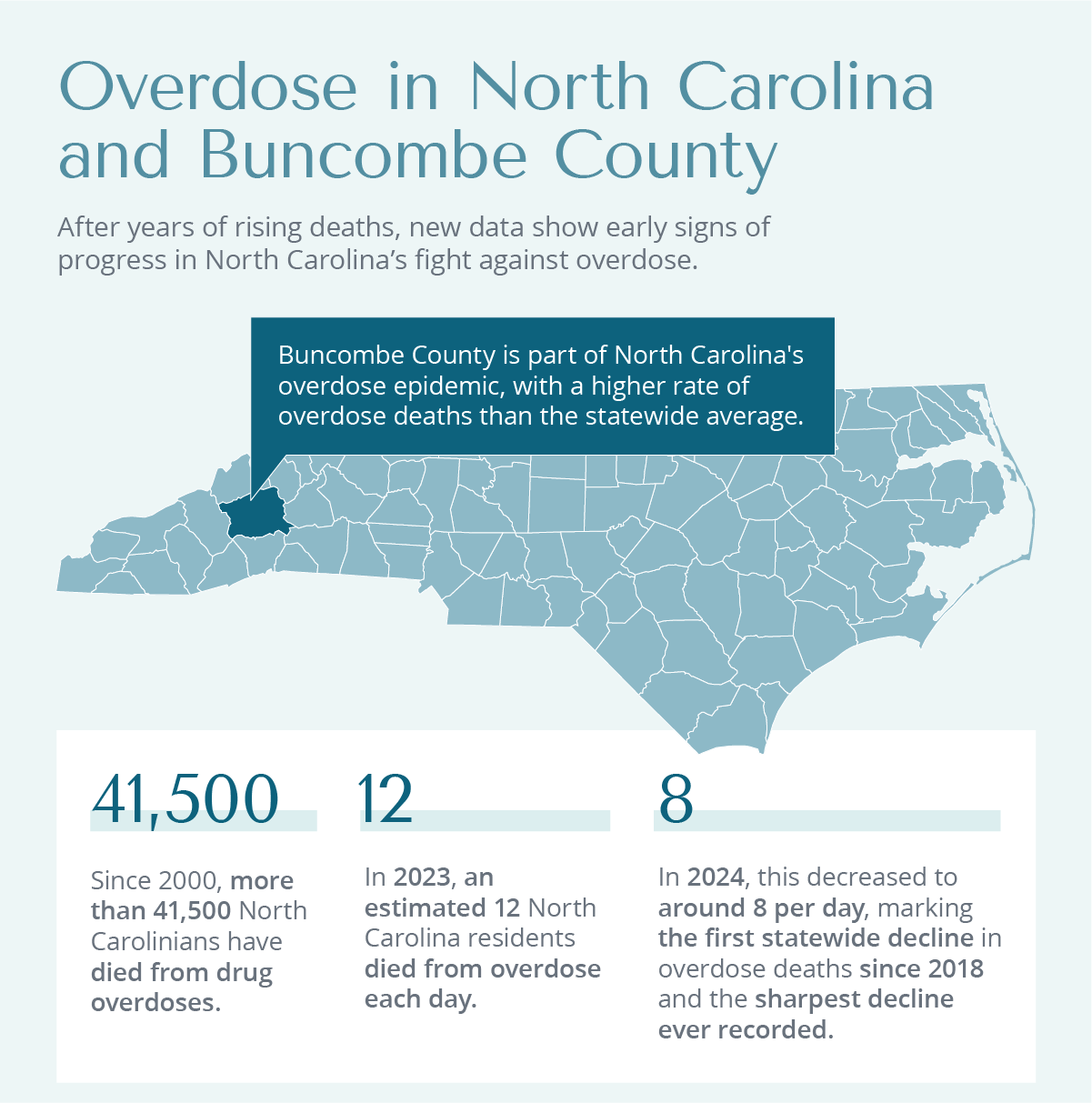
If you are watching headlines about Asheville’s opioid epidemic and feeling scared for someone you love, you are not alone. Buncombe County was among the NC counties with the highest rates of overdose deaths in 2024, most linked to fentanyl or prescription opioids. This overdose crisis affects people in every neighborhood, and it can feel overwhelming.
There is also real hope. Local treatment, including medication for opioid use disorder, lowers the risk of fatal opioid overdose and helps people rebuild their lives. Below, we explain what is happening in our community, how fentanyl drives drug overdoses, and how treatment and harm reduction work together to save lives.
The local landscape of the opioid crisis
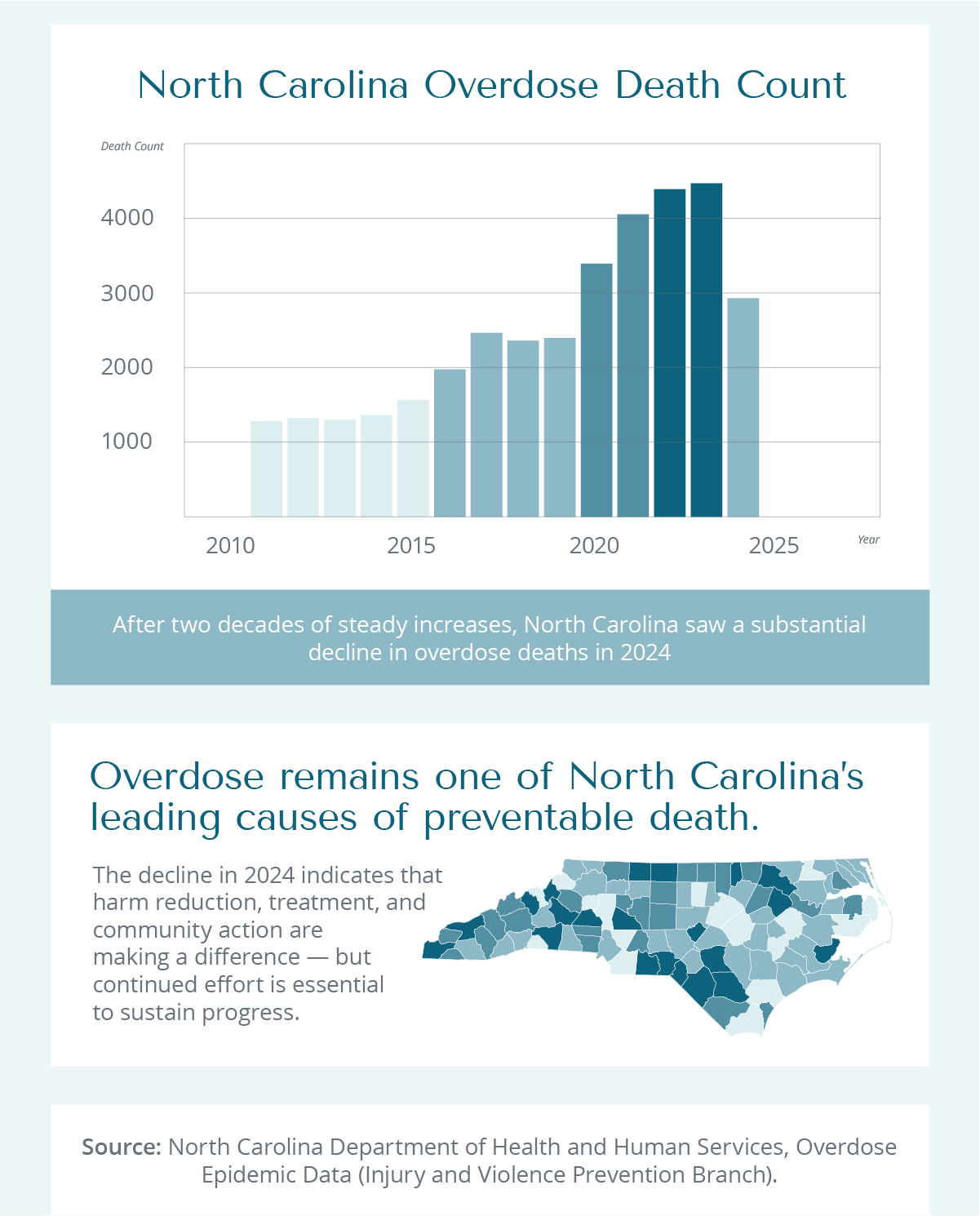
North Carolina state health statistics show year-over-year increases in drug overdose deaths between 2018 and 2023, with synthetic opioids, especially fentanyl, leading most fatalities. Local officials have reported that fentanyl is found not only in heroin but also in counterfeit pills and other drugs. These trends reflect nationwide data from the Centers for Disease Control and Prevention, which track drug overdose deaths.
This means more families have been facing sudden loss from opioid overdose, and people who use drugs are encountering fentanyl in unregulated drug supplies.
The Asheville opioid epidemic is serious, but it is not hopeless. Emergency responders and public health teams are expanding naloxone distribution to prevent overdose. Communities can reduce deaths when treatment access, overdose prevention education, and harm reduction services work together.
In fact, for the first time since 2018, the number of overdose deaths in the state went down in 2024, from 4,442 the year before to 3,060. While the only good number is zero, this does indicate a possible turn in the tide.
Fentanyl, overdose deaths, and harm reduction
Why has fentanyl spiked the number of deaths by overdose? Fentanyl is a powerful synthetic opioid. It is much stronger than heroin, so a small amount can cause an overdose. It is also hard to see, taste, or smell, which makes testing and prevention essential. Fentanyl is often added to other drugs in unpredictable amounts, meaning people are using substances with fentanyl in them without knowing it, or knowing how much.
Key factors driving overdose deaths in Buncombe County and across North Carolina include:
- Potent synthetic opioids, fentanyl and similar drugs are widely present in drug supplies.
- Counterfeit prescription medications, fake pain pills, or benzodiazepines may contain fentanyl.
- Mixing opioids with stimulants like cocaine or methamphetamine, or other drugs, raises risk.
- Returning to drug use after a period of sobriety increases risk for fatal overdose, because people often aren’t aware of how their tolerance has gone down and use too much at once.
The bottom line: harm reduction helps people stay safer. Practical steps include carrying the overdose reversal drug naloxone, using fentanyl testing strips when available, avoiding using alone, and starting treatment as soon as possible. Harm reduction helps prevent overdose and saves lives.
Medication-assisted treatment in Asheville
Medication for opioid use disorder is the gold standard of care. Medication-assisted treatment combines FDA-approved medications with counseling, group therapy, and practical services. There are three main medications for opioid use disorder (MOUDs):
- Buprenorphine attaches to opioid receptors in the brain to reduce cravings and withdrawal.
- Methadone, a long acting opioid medication, stabilizes the brain and reduces drug use.
- Naltrexone blocks opioid receptors and can help prevent relapse after detox.
Research shows that people on methadone or buprenorphine cut their risk of death substantially compared with no medication.
Medication works best as part of whole-person care. That can include therapy for trauma, support for housing or employment, and coordination with mental health care. People in addiction recovery benefit from relapse prevention planning, family support, and ongoing recovery check-ins.
If you are exploring whole-person treatment options, learn how to start opioid addiction treatment in Asheville.
Overdose prevention you can use today
You can take steps today to prevent overdose for yourself or someone you love.
- Carry naloxone: Naloxone is an FDA approved overdose reversal drug that can quickly restore breathing. Naloxone distribution programs are expanding across North Carolina, accessible through many pharmacies, community groups, and harm reduction programs.
- Learn the signs of opioid overdose: Slow or stopped breathing, blue or gray lips or nails, unresponsive, choking sounds.
- Do not use alone if possible: Have someone check in, use a phone lifeline, or stagger use.
- Test your supply when you can: Fentanyl test strips are legal to possess in North Carolina and can help you know your risk.
- Avoid mixing drugs: Combining opioids with alcohol, benzodiazepines, or stimulants increases overdose risk.
- Start treatment as soon as you are ready: Medications can help reduce cravings and ease withdrawal symptoms.
- Support others with compassion: Stigma can keep people from seeking care.
These prevention steps protect our local community members. The Substance Abuse and Mental Health Services Administration (SAMHSA) offers detailed instructions on how to respond to a possible opioid overdose, step by step, to help save lives.
How Insight Recovery Center can help
At our center, we meet you with respect and practical support. If you are ready to stop opioid use, our team can help you get proper medications and connect with specialists and community resources.
If you are worried about fentanyl, heroin, or other opioids, we can help you take the first step. Treatment access and harm reduction tools can help Asheville continue to reduce annual opioid overdose deaths and support long-term recovery for our community members.
FAQs
Yes. North Carolina continues to face an overdose crisis that includes rising overdose deaths and emergency department visits. Synthetic opioids, especially fentanyl, are a major driver.
Our community is affected by substance use and drug overdoses. This does not define Asheville; it is a public health challenge that many communities are facing. Treatment, prevention, and harm reduction efforts are helping to prevent overdose and support recovery.
Fentanyl is found in many illicit drugs across North Carolina. It increases the risk of fatal opioid overdose because it is highly potent and often unexpected. Public health efforts focus on naloxone distribution, fentanyl testing, and rapid access to treatment.
Yes. Fentanyl testing strips are legal to possess in North Carolina. Testing is a harm reduction tool that helps people who use drugs identify fentanyl in their supply and prevent overdose.
Fentanyl is a controlled substance. All possession without a prescription is illegal.
Emergency teams secure the airway, provide oxygen and ventilation, and give naloxone. They monitor the person as naloxone wears off, manage withdrawal symptoms, and connect patients to treatment and resources.
The bottom line
Asheville’s opioid epidemic is real, but it is not the end of the story. With harm reduction, naloxone, and medication-assisted treatment, we can reduce overdose deaths and support recovery for our neighbors in Buncombe County. If you or someone you love is at increased risk because of fentanyl or other synthetic opioids, reach out today and take the next step toward safety and healing.