

Many people want to get healthy without stepping away from work or family for weeks. In many cases, you can keep working while you get help. The right outpatient programs, a clear plan with your employer, and legal protections can make it possible to balance work and recovery.
What is outpatient rehab?
Outpatient rehab is addiction treatment you attend while living at home. You travel to a treatment facility for scheduled therapy sessions, then return to your normal routine. This format lets you keep up with work, family responsibilities, and school while you build a strong foundation in recovery. Outpatient rehab includes therapy sessions like individual counseling, group therapy, and education.
Some people start with inpatient rehab or medical detox if they have severe withdrawal risks or higher initial care needs, then step down to outpatient care.
Intensive outpatient programs provide more hours of care on multiple days per week, which can fit well for professionals who need a structured environment but also need to work.
Understanding your rights at work (FMLA & confidentiality)
Seeking treatment is a medical decision, and several federal laws relate to addiction treatment.
Family and Medical Leave Act (FMLA)
The Family and Medical Leave Act provides eligible employees up to 12 weeks of job-protected leave for serious health conditions, including substance use disorders and mental health treatment. Eligibility depends on several conditions, including your employer size and your work history with the company.
Americans with Disabilities Act (ADA)
The Americans with Disabilities Act is a federal law that can provide legal protection from discrimination. The ADA supports reasonable accommodations for medical treatment, such as modified schedules for therapy. The ADA prevents employers from firing you simply for seeking treatment for a medical condition. This protection does not cover current illegal drug use at work, but it can protect people in recovery.
Confidentiality protections
Your medical information and substance use treatment are private. Under HIPAA and other protections, only certain medical providers and approved HR staff may see your records. Substance use disorder records also have strong privacy rules.
Key points to remember:
- FMLA is unpaid medical leave, but it protects your position and health benefits. This may help your financial stability long term.
- Many employers can make reasonable accommodations, such as flexible scheduling, for medical treatment.
- Talk with HR about workplace policies before you attend rehab. Ask about any forms your medical providers need to sign.
This section is for basic information only, not legal advice. If you have questions about the Family and Medical Leave Act or ADA, speak with HR or an employment attorney.
How to balance treatment and employment
Balancing recovery with work life takes careful planning. You can build a routine that supports your recovery journey while you protect your professional responsibilities.
Map your schedule
- List all work commitments, family responsibilities, and commute times.
- Block out when you can attend outpatient programs and therapy sessions.
- Consider support groups in the evening or weekends to help with relapse triggers.
Coordinate with your employer
- Decide what to share. You can say you are receiving treatment for medical reasons without sharing details.
- Ask about flexible scheduling, paid time off, or short blocks of medical leave.
- Review workplace policies to understand how to request time away.
Build your support system
- Share your plan with trusted family members or friends who can help with rides or child care.
- Use group therapy and support groups to practice coping skills and stress management for your work environment.
Plan for health first
- If you need medical detox for alcohol addiction or drug addiction, complete that step before starting regular outpatient rehab.
- Some people start with inpatient treatment or inpatient care if symptoms are severe, then use a step-down method into intensive outpatient programs, then standard outpatient treatment.
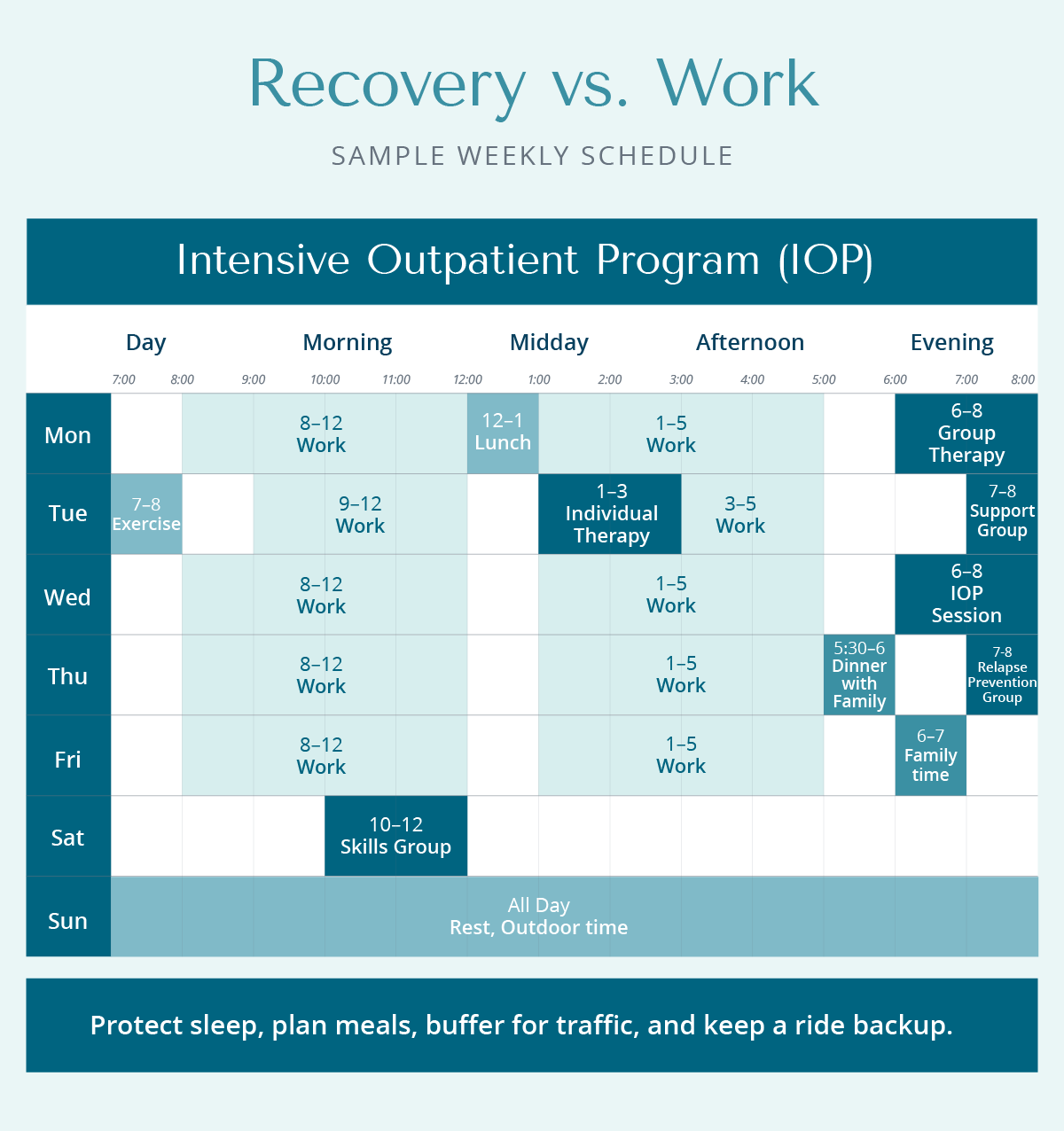
Can you work while in rehab? The answer is often yes, with the right treatment plan and support. Outpatient treatment can fit around your work life when you communicate early and use your benefits.
Insight Recovery Center’s flexible options for working adults
At Insight Recovery Center, we understand that people need treatment options that respect their work and family responsibilities. Our outpatient rehab programs are built to help adults keep momentum at work while focusing on healing.
What we offer
- Compassionate, professional care that includes individual counseling, group sessions, and education grounded in evidence-based addiction treatment
- A step-down method across levels of care, for example, moving from inpatient rehab elsewhere to IOP, then to standard outpatient care as you stabilize
- Personalized treatment plan discussions that consider your work commitments and treatment needs
- Mental health treatment, alongside addiction care, for depression, anxiety, and trauma-related issues
- A compassionate team that can coordinate with medical providers as needed for comprehensive care
Our team can help you map a realistic schedule that coordinates work and addiction treatment.
Explore practical addiction recovery options
Learn about our outpatient rehab and how it supports maintaining work.
See our intensive outpatient programs for a more structured environment that still lets you balance work.
Partial hospitalization is the next step up, offering even more intensive care.
If you need a higher level of care, or medical detox, we can coordinate with inpatient rehab partners.
When you’re ready, speak with our admissions team for private guidance about scheduling and next steps. We can discuss payment options and help you understand insurance coverage for rehab.
Say yes to care and your career
Your career matters, and so does your health. With the combination of legal protections, flexible scheduling, and confidential care, many people continue working while receiving treatment. You do not have to choose between your work and your recovery journey.
FAQs about balancing work and recovery
The FMLA can provide job-protected leave for eligible employees when you attend rehab for substance abuse or mental health issues. The ADA may also provide legal protection from discrimination for people in addiction recovery. Policies and eligibility vary, so speak with HR.
Yes. Many people attend outpatient treatment while working. Outpatient rehab often includes therapy sessions several times per week, which can be arranged around work responsibilities and family members’ schedules.
Outpatient programs are often a good fit, and intensive outpatient programs add more structure while allowing you to keep working. Some people need medical detox or inpatient treatment first, then step down to outpatient rehab.
Most inpatient care programs expect you to focus solely on treatment while you are on site, so you typically cannot keep working during inpatient rehab. After discharge, you can attend outpatient rehab while going back to work.
If you remain employed and your employer allows it, you can continue earning while attending outpatient rehab. If you use medical leave, pay depends on your benefits and state laws.